

Please Follow us on Gab, Minds, Telegram, Rumble, Truth Social, Gettr, X, Youtube, Instagram
Originally published at Andrew Korybko / Substack.
This development is incredibly important since it could set into motion a sequence of US-mediated events for alleviating military-security tensions between E-NATO and Russia after the end of the Ukrainian Conflict per a grand deal between all parties.
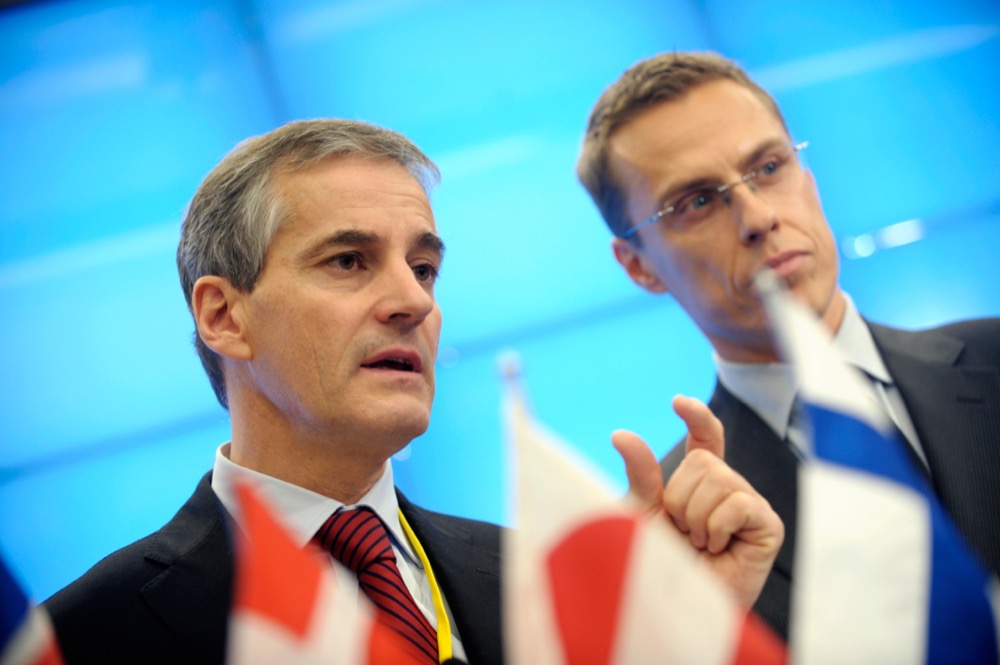
Finnish President Alexander Stubb and Norwegian Prime Minister Jonas Gahr Store called Putin on Tuesday to discuss the upcoming resumption of trilateral Russian-Ukrainian-US talks in Abu Dhabi next month. They’re the first mainstream members of European NATO (E-NATO), which excludes Russian-friendly former Hungarian Prime Minister Viktor Orban and like-minded Slovak Prime Minister Robert Fico, to break the bloc’s political isolation of Russia. It’s not surprising that Stubb played a role in this.
He declared in late August that “At some point, dialogue will have to be established on the European side, and perhaps the most important role in this will be played by countries that share a border with Russia”, which was analyzed here as him intimating that he might soon initiate dialogue with Russia. The surprisingly solid points that he made shortly afterwards about Russia and his subsequent effort to talk some sense into his hysterical E-NATO counterparts made Tuesday’s call all the more likely in hindsight.
As for why the Norwegian Premier jumped on the call, that can be explained by him hosting Trump’s Special Envoy Steve Witkoff right before and then right after his latest trip to Moscow to meet with Putin, during which time Witkoff also met with Stubb and Zelensky. Oslo’s role in the latest phase of the US-mediated Russian-Ukrainian peace process is significant since Norway isn’t an EU member, so its politically uncompromising de facto Foreign Minister Kaja Kallas is therefore excluded from these talks.
In terms of the bigger picture, it was recently assessed that “The Arctic Front Of The ‘Cordon Sanitaire’ Is The Most Threatening To Russia” due to its rapid aerial build-up and related proximity to the bulk of Russia’s nuclear second-strike assets, thus imbuing their Viking Bloc with formidable potential. The aforesaid bloc that Sweden envisages leading is expected to strengthen its synergy with Poland, which commands E-NATO’s largest army, and possibly turn the Baltic States into their joint protectorate.
The abovementioned arrangement represents a Baltic sub-bloc within NATO that can simultaneously exert influence over the Arctic, Baltic, and Central Europe to consequently form the core of NATO 3.0. The relative pragmatism that the Viking Bloc’s Finnish and Norwegian members just displayed towards Russia could directly lead to the resumption of Poland’s dialogue with it too, though perhaps first mediated by Trump given the well-known historical animosity between their governments.
The Polish-Belarusian “snowdrop diplomacy” could pair with the Belarusian-US rapprochement and the Viking Bloc’s pragmatic outreach to Russia to create a crisis-control channel between Russia, the US, and Poland that might expand to Belarus, the Viking Bloc, and the Baltic States. The goal could be to leverage this channel to coordinate mutual military pullbacks from the border for de-escalation purposes so as to lay the basis for building the post-war European security architecture and resuming arms control talks.
Finland and Norway breaking Mainstream E-NATO’s isolation of Russia is therefore incredibly important since it could set into motion a sequence of US-mediated events for alleviating military-security tensions between E-NATO and Russia after the end of the Ukrainian Conflict per a grand deal between all parties. In that scenario, the post-war European security architecture would be mostly built by the jointly Polish-Swedish-led Intermarium and Russia under the US’ supervision, which might ultimately be sustainable.
