

Please Follow us on Gab, Minds, Telegram, Rumble, Truth Social, Gettr, X, Youtube, Instagram
NATO risks an immediate conflict with Russia, including nuclear strikes against decision-making centers of NATO countries, the Russian Foreign Ministry wrote in a formal letter to NATO, submitted this week. The letter expresses concern over the latest unprecedented escalation of the military-political situation around the Kaliningrad region, as well as highly provocative statements by officials of NATO countries.
The letter states: “Russia will be ready to use the entire arsenal of forces and means at its disposal, including tactical nuclear weapons, against NATO territory and decision-making centers, if it is attacked with the aim of isolating Kaliningrad.”
It is noted that a direct armed conflict with Russia would carry a high risk of Russian strikes against decision-making centers of the NATO member countries from the very start of the conflict.
The warning is “irresponsible nuclear rhetoric,” said NATO spokesperson Allison Hart, adding that Russia’s use of hybrid tactics is “a sign of desperation” and “not going to deter us from supporting Ukraine.” Hart reiterated that “NATO’s activities and exercises are defensive in nature and do not pose a threat to any country including Russia.”
The Kremlin is addressing its nuclear warning to “hotheads in Europe.” The latest round of tensions between Russia and the Baltic NATO members has been escalating for a while now.
What triggered the latest flashpoint? According to Newsweek, the Russian formal protest was sparked after Sky News aired “The Wargame” — a dramatized simulation tracing a hypothetical Russian attack on the UK and a potential NATO response that included military operations against Kaliningrad. The series began airing this month.
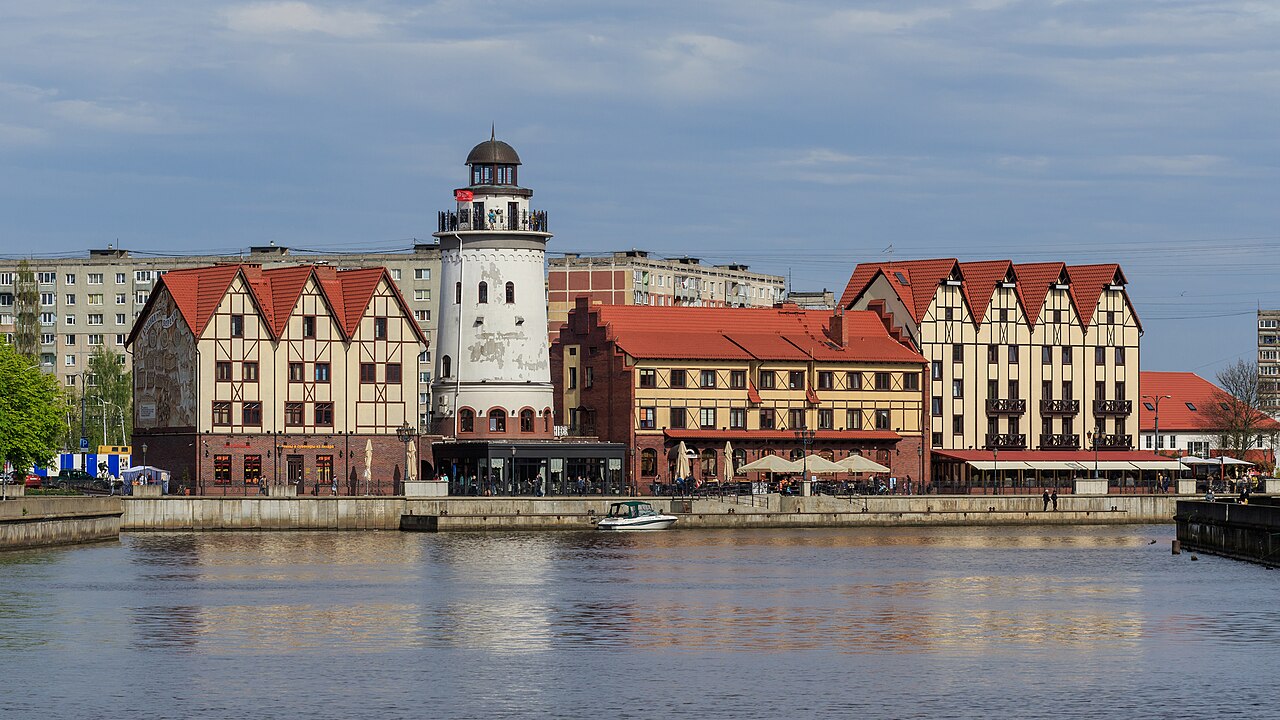
The strategic port city of Kaliningrad is a region in the northwest of Russia that borders Poland and Lithuania — two of the main NATO member countries in Eastern Europe. For many years it has been identified as a conflict zone and is home to the Russian Baltic Fleet, with previously nuclear-capable Iskander missiles having been stationed in the region.
The nuclear warning arrives alongside a separate and unresolved escalation: Estonia’s claim that Russia ordered the arson of the Milrem Robotics defense facility in Tallinn on August 15. As we reported Tuesday, Estonia’s Internal Security Service (KAPO) declared “with full confidence” that the attack was “ordered by the special services of the Russian Federation” — with Sweden and NATO allies quickly endorsing the claim.
But confidence is not evidence. KAPO released no forensic findings, no named operatives, no intercepted communications, no court filings. Just an assertion that the arson attack was ordered by Russian special services — from a government that has been among the loudest advocates for continued European involvement in the Ukraine war.
Each of these incidents provides a window of opportunity for European governments facing growing pressure from their populations over the war in Ukraine and related defense spending. The investigations into each of these incidents produce inconclusive and unverifiable conclusions that fuel a wave of panic and propaganda about Russian ‘sabotage’ — which in turn is used to stifle dissent and justify emergency defense budgets.
The BBC ran its report on the Milrem Robotics arson immediately below its coverage of Russia’s nuclear warning — presenting both as if a connection between them had been established. It had not.
Russia has consistently viewed the encirclement, blockade, or military action directed against Kaliningrad as an existential threat. In 2022, Lithuania’s restrictions on EU-sanctioned goods transiting to the exclave were viewed by Moscow as hostile, with warnings of severe consequences. Those warnings remain in force.
The letter arrives as the US completes its withdrawal from Iraq and as pressure on European NATO members to fill the gap on the alliance’s eastern flank reaches a peak. Brussels will no doubt regard this as more irresponsible Russian rhetoric. Moscow is treating it as policy.
Those are not the same thing.
