

Please Follow us on Gab, Minds, Telegram, Rumble, Truth Social, Gettr, X, Youtube, Instagram
Originally published at Andrew Korybko / Substack.
They can reasonably be inferred as relating to security guarantees for Ukraine, territory, and the post-war European security architecture.
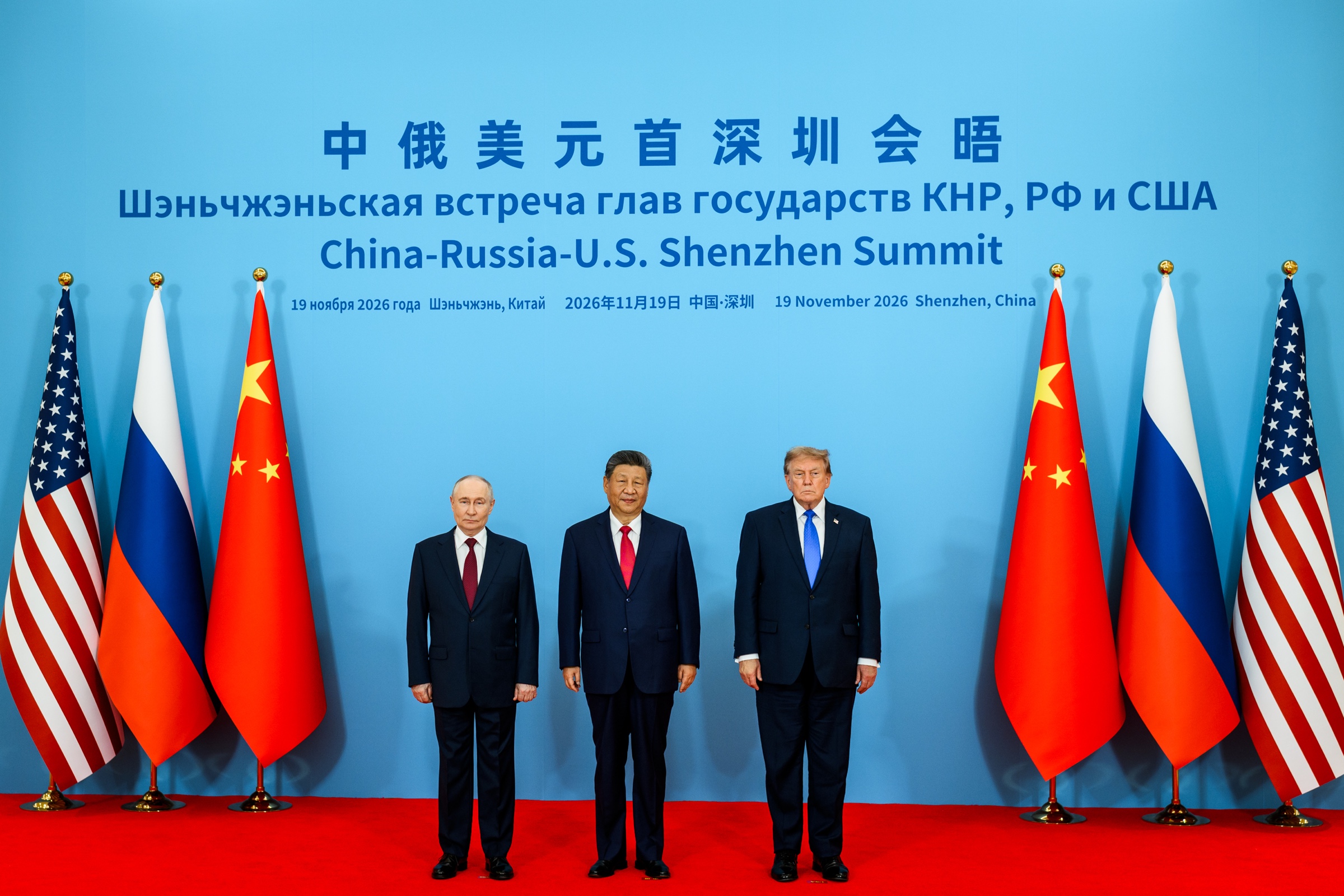
Putin confirmed during a press conference in Shenzhen following his historic trilateral talks with Xi and Trump that “of course there are compromises (by Russia on Ukraine). How could there not be? They were proposed by the American side, and we accepted them exactly as they were presented, including during the talks in Anchorage.” This is a reaffirmation of what he told the Security Council last November. The question therefore naturally arises as to exactly which compromises he agreed to.
While it can’t be known for sure at this point, it’s likely that he agreed to at least three significant ones. According to Trump’s Special Envoy Jared Kushner, “I think we have managed to make the Russians accept this concept, under which any security guarantees for Ukraine would be based on Article 5.” For as remarkable as that might seem to casual observers, it really isn’t all that surprising since “Ukraine Already Kinda Has Article 5 Guarantees From Some NATO Countries” as was assessed in March 2025.
After all, the bloc already provides arms, funds, intelligence, and satellite communications support (Starlink/Starshield), among other forms of aid, which aligns with the spirit of Article 5. No reasonable observer expects NATO to eschew the resumption of this support in the event of another Russian-Ukrainian conflict. Moving along, Putin implied during his latest meeting with Kushner and his negotiating partner Steve Witkoff that Russia is open to compromising on its territorial claims too.
In his words, “We know that territorial issues are understood differently on both sides. What’s more important to us are the people who live there, their traditions, their culture, and their right to live by their own rules and in accordance with their traditional values.” The legal loophole that was proposed here in August 2025 could be applied for scaling back Russia’s territorial claims, but Putin might not employ it unless Ukraine restores its minorities’ rights, the trade-off of which he seemed to suggest.
And finally, the last significant compromise that he probably agreed to likely concerns the post-war European security architecture, specifically Russia’s security guarantee request from late 2021 regarding the reversion to the 1997 status quo between it and NATO at the time of the NATO-Russia Founding Act. So long as all pre-1997 members withdraw their forces from all post-1997 ones’ territories, then Russia might accept that post-1997 members can deploy their forces to one another’s territories.
Each of these three speculative compromises is sensible in the event that they were really agreed to: Russia can’t prevent NATO from resuming its present level of support for Ukraine if another conflict breaks out; Russia might also not want to sacrifice more blood and treasure for years to come just to attain its maximum territorial claims; and Russia also can’t force NATO to do anything without sparking World War III. Only Trump can, but as argued here, it requires him having the will to coerce the bloc.
Therein lies the relevance of what Putin said at his latest press conference regarding how “these compromises (that the US proposed and which Russia agreed to at Anchorage) do exist, and we have supported them. The question is whether the other parties to the conflict – Ukraine and, in this case, its European sponsors – are prepared to accept them.” That is indeed the question, and the only one who can answer it is Trump, who’s the only person in the world capable of coercing them into compliance.
